


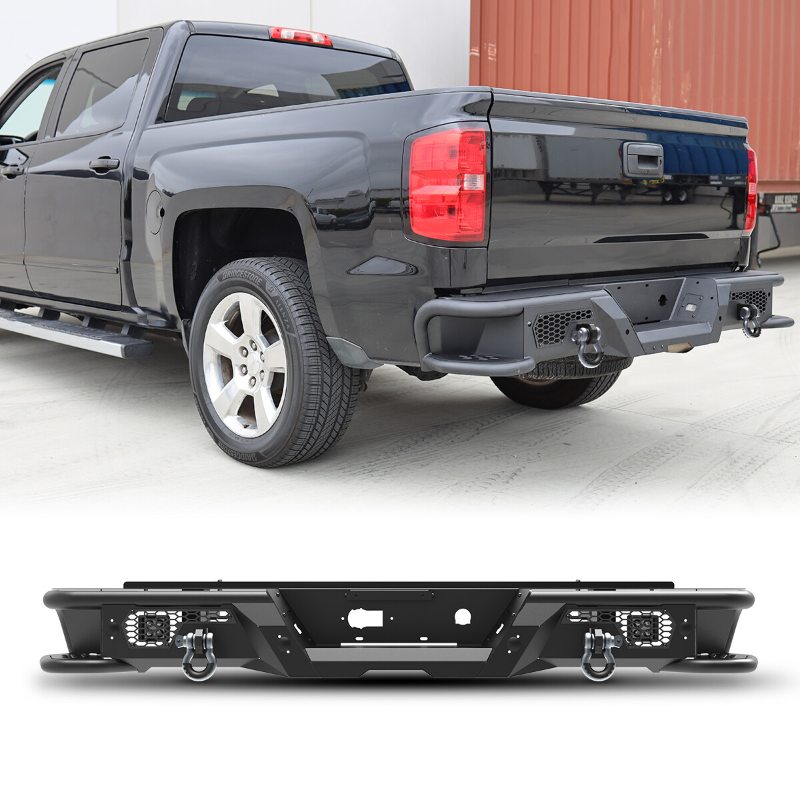
Even if your truck is perfectly safe, you can still get a ticket because you modified the bumper height. The rules are different between federal standards and a patchwork of state vehicle codes, and the two are not consistent. In this guide, we explain what actually applies to a pickup truck, where the numbers come from, and how to make the replaced or raised units comply with road regulations regarding Truck Rear Bumper Height.
Please note in advance that laws are constantly changing and enforcement varies. Please use the following figures for reference. Before you modify anything, you should check the latest regulations with your state’s DMV, State police vehicle-equipment division, or vehicle inspection.
The Federal Rule: Part 581 and Why It Probably Does Not Apply to Your Truck
The federal bumper standard is 49 CFR Part 581. It requires that bumpers protect the vehicle in low-speed impacts and defines a protection zone between about 16 and 20 inches above the ground. The key point is that Part 581 applies to passenger cars only. Pickup trucks, SUVs, vans, and other multipurpose passenger vehicles are not included. That is why factory truck bumpers are much higher than car bumpers, affecting the Truck Rear Bumper Height.
Separate federal rules (FMVSS 223 and 224) govern rear bumper guards on trailers and semitrailers above 10,000 lb GVWR. You can mainly see them on semi-trailers, but a pickup truck owner doesn’t need to install them.
Practical takeaway: for a light-duty pickup, the binding rules are almost always state rules, not federal ones.
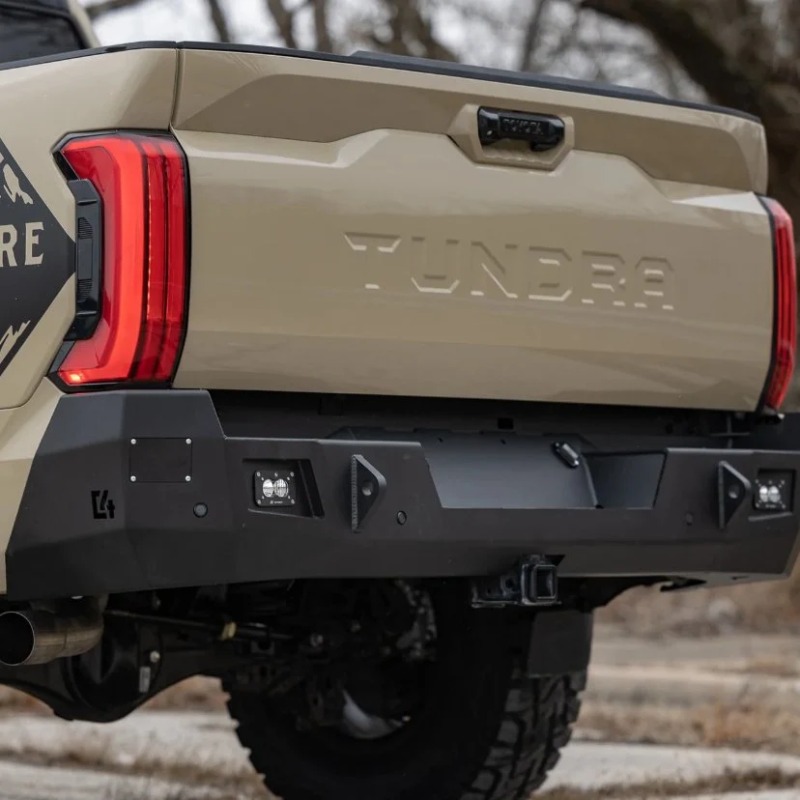
Understanding Truck Rear Bumper Height Regulations
State Rules: Height Limits Tied to Vehicle Weight
Most states regulate bumper height in the same way. People should measure the maximum height from level pavement to the bottom of the bumper bar and scale it by GVWR or shipping weight. And the rear limit is usually one to two inches higher than the front.
Example: Virginia
Virginia’s code sets both a minimum and a maximum standard for trucks. For trucks rated 4,500 lb GVWR or less, the width of the front and rear bumpers must be between 14 and 28 inches. For weight from 4,501 to 7,500 lb, the rear limit increases to 30 inches. From 7,501 to 15,000 lb, the rear limit is 31 inches. When it is above 15,000 lb GVWR, the height limits do not apply anymore. The measurement point is located at the lower edge of the main horizontal bumper bar, excluding bumper guards.
Example: Washington
In Washington, rules limit the front and rear wheel sizes of cars and SUVs to 22 inches. Trucks under 4,501 lb GVWR are limited to 24 inches for front and 26 inches for rear; while 4,501 to 7,500 lb allows 27 inches for front and 29 inches for rear. But for 7,501 lb and above, 28 inches for front and 30 inches for rear are allowed.
Example: Florida
In Florida, the net shipping weight is limited rather than GVWR. Under 2,000 lb, the limits are 24 inches for front and 26 inches for rear; 2,000 to 3,000 lb allows 27 inches for front and 29 inches for rear; 3,000 to 5,000 lb allows 28 and 30 inches.
Example: Minnesota and Michigan
In Minnesota, the height of four-wheel-drive multipurpose vehicles, vans, and pickups is capped at 25 inches, measured from the bottom of the bumper to the ground. However, in Michigan, people should consider frame height as well as bumper height. Also, any truck or SUV with raised suspension should be equipped with both front and rear bumpers.
Several states have no restrictions on bumper height, such as Arizona, Montana, and Nebraska. However, some other equipment rules such as mud flaps and overall height still apply. Other states require that a rear bumper should be installed on every pickup truck regardless of height.
Rules That Catch People Out
- Bumpers must generally be present. Even without height restrictions, it is illegal to fully remove bumpers in many states
- You usually cannot create a drop bracket to adjust the bumper position after raising the vehicle. Maryland, for example, prohibits modifying or extending a bumper up or down to compensate for suspension changes.
- License plate visibility and illumination must be maintained. A bumper that blocks the plate light is an equipment violation.
- There are separate height restrictions for vehicles, which are commonly at 13 feet 6 inches.
- In states with safety inspections, vehicles with sharp edges, protruding brackets, and an unfinished plate may not pass the inspection.
How to Measure Your Bumper Height Correctly
At first, you should park your vehicle on a flat concrete surface, keep the tires at normal pressure, and empty the cargo. Then you need to measure vertically from the ground to the lowest point of the main horizontal bumper bar, not to a step pad, guard, or hitch. It is important to record front and rear separately. If your state also requires frame height, you can measure to the bottom of the frame rail at the same points.
Staying Legal When You Replace a Rear Bumper
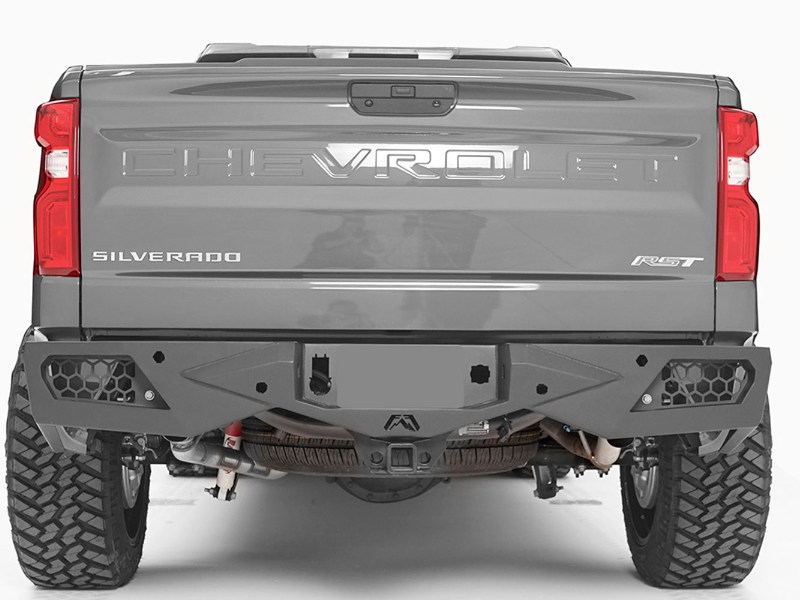
If you use a direct-fit replacement that uses the factory mounting points, you can restore the original height. So it inherits the compliance status your truck left the factory with. This is the easiest way to upgrade legally. And it is why OEM-style steel replacements are safe choices for daily-driven trucks. Universal bumpers are often installed on the adapter brackets. Drop hitches and lift kits are the root causes of the height problem.
If your truck has already been lifted, you should calculate the final bumper height before ordering. In detail, you need to add the suspension lift plus any increase from larger tires (half the tire diameter increase) to your current measurement. Then you can compare the final result with the GVWR level cap of your state.
If you need help to find a suitable bumper based on your exact year, trim, and sensor configuration, you can refer to our guide about choosing a replacement rear bumper for a pickup. Also, you can read the step-by-step rear bumper installation guide if you plan to install it by yourself.
Summary
Federal bumper height rules target passenger cars, not pickup trucks. The real constraints are state maximums based on weight class, presence requirements, plate visibility, and overall height scaling. If you choose a direct-fit replacement with factory height, you stay within those limits without paperwork or guesswork.
You can find various direct-fit truck rear bumpers that can fit with original factory mounting points for Ford, Chevrolet, GMC, Toyota, and Nissan trucks. In this article, we just provide general information, not legal advice. If needed, you can verify requirements with your state authority.
