


From a spec sheet, aluminum seems to be a premium choice: lighter, corrosion-resistant, and modern. But it looks like something else on an invoice. In this article, we compare the real numbers against both materials – not just purchase price, but also shipping, coating, repair, fuel, and resale. In this way, you will know the actual cost of each material over the truck’s entire lifespan while considering the differences in Steel vs Aluminum Truck Rear Bumpers.
Purchase Price: The Headline Numbers
The numbers are mainly for a comparable heavy-duty rear bumper on a common half-ton or three-quarter-ton pickup:
- OEM-style heavy-gauge steel replacement: $250-$450
- Aftermarket steel plate off-road bumper: $700-$1,600
- Aftermarket aluminum plate off-road bumper: $1,200-$2,600
- Custom fabricated steel one-off: $1,200-$2,500
- Custom fabricated aluminum one-off: $2,000-$4,000
- Corner end caps only (steel): $120-$180
The pattern is suitable for all platforms: with the same design and coverage, aluminum is about 40 to 100 percent more expensive than steel. There are two main reasons for this difference. The original price of aluminum sheet is several times that of ordinary steel. Also, aluminum fabrication demands more skill – AC TIG welding, tighter heat control, and there will be more scrap if a weld goes wrong.
Weight and What It Is Worth (Steel vs Aluminum Truck Rear Bumpers)
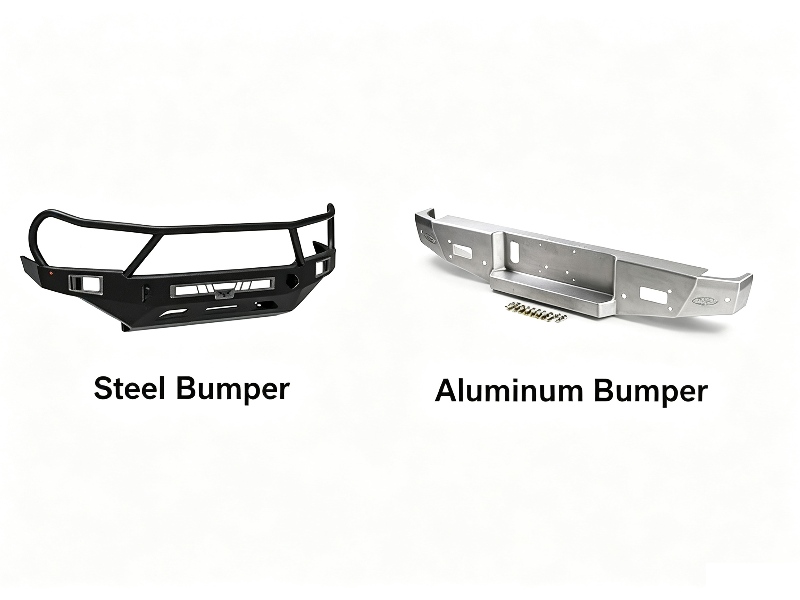
A steel heavy-duty rear bumper for a full-size pickup usually weighs 90 to 150 lb. But a comparable aluminum bumper weighs around 50 to 90 lb. Because aluminum has low stiffness, you cannot simply divide it by three. Instead, you need to add thickness to achieve the same stiffness.
So the real saving is usually 40 to 80 lb. How much is that worth? In terms of fuel, very little. But based on experience, fuel economy decreases by about 1% for every 100 pounds of vehicle weight added. If a truck averages 18 miles per gallon and travels 15,000 miles per year, losing 60 pounds would save about 5 gallons of fuel—or dozens of dollars. Over five years, the fuel savings are far from enough to offset a $700 price gap.
Where the weight matters is payload. If you’ve modified an off-road vehicle with a rooftop tent, drawer system, water, and a bumper-mounted spare, then 60 lb of unrecoverable payload at the rear of the vehicle is a real engineering constraint. That’s the reason for choosing an aluminum frame, not the fuel.
Costs People Forget to Compare
Shipping
Bumpers are shipped as oversize freight. Compared to aluminum bumpers, a heavier steel bumper can cost $50 to $150 more to ship on the same lane than aluminum. It is a difference that may seem small, but it does exist. But you can avoid it if you buy from a supplier who has stock in a US warehouse; you can enjoy free shipping at the same time. It is often worth more than the material difference.
Coating and Corrosion Protection
The steel must be coated both inside and out; otherwise it will rust. If a bumper arrives in its original color or with only a primer, you need to spend another $150 to $400 for powder coating. However, quality OEM-style replacements arrive with a coating already applied, so this cost is usually already in the price. In fact, aluminum needs no coating for protection, but most owners still powder coat it anyway for appearance. Therefore, this line item is often a wash.
Repair Cost After Damage
In this respect, steel has a clear advantage. A bent steel bumper can be heated and pulled straight, or cut and re-welded at almost any welding shop for $100 to $300. But for a cracked aluminum bumper, you should find a shop with AC TIG capability that uses the correct filler alloy. In fact, these shops are rare and expensive, which usually cost between $250 and $600. Moreover, the welds in work-hardened aluminum are more likely to crack again. After five years of real use, this gap tends to matter more than the fuel difference.
Galvanic Corrosion Mitigation
Aluminum bumpers are bolted to a steel frame, so the contact points will corrode under the influence of road salt unless you use proper washers, coatings, or stainless hardware for isolation. Good aluminum bumpers include this, while cheap ones do not, and installing a vibration isolation device later costs both parts and labour.
Five-Year Cost of Ownership Example
For example, a daily-driven half-ton in a salt state, 15,000 miles a year, occasional trailer use, one moderate impact over five years.
- Steel: $350 purchase (coated, free shipping) + $200 one repair + $0 coating = about $550
- Aluminum: $1,400 purchase + $120 shipping + $400 one repair = about $1,920, minus about $150 in fuel savings = about $1,770
Even generously, the cost of steel is less than one-third that of aluminum. Now let’s reverse the assumptions: for expeditionary gear where payload is critical, an additional 60 pounds will indeed change the weight you can carry, and the calculations will also change. But the conclusion is that aluminum is a capability purchase, not a cost-saving one.
Resale and Insurance
The material itself does not increase resale value, but condition and fitment do. In fact, a clean, correctly fitted factory-style bumper is more helpful for a private sale than an unusual aftermarket unit. Because modified bumpers will narrow down the pool of potential buyers, moreover, heavily modified bumpers may raise questions from insurance companies after a claim, while a direct-fit replacement at factory height is less likely to raise such questions.
Which Should You Buy?
For most truck owners who tow occasionally, drive on dirt roads, and want to properly replace a rusted or bent bumper, powder-coated heavy-gauge steel is a better choice in every way except weight. But you’d better choose aluminum if the payload of a purpose-built expedition rig is severely limited and you can accept the repair and cost penalties.
If you want to know about the underlying engineering comparison, you can read best materials for heavy-duty rear bumpers; and if you need fitment guidance, please refer to how to choose a replacement rear bumper. You can order various steel truck rear bumpers for Ford, Chevrolet, GMC, Toyota, and Nissan pickups. Moreover, orders will be shipped free from a US warehouse in 3-5 business days.
Frequently Asked Questions
Is an aluminum bumper worth the extra cost on a daily-driven truck?
For most daily drivers, no. The weight reduction is too small to impact fuel or handling meaningfully, while the purchase premium and repair cost are both high. The value of aluminum lies in payload-limited expedition builds, not in commuter or work trucks.
Does aluminum really not rust?
Aluminum does not form red iron oxide, but it will corrode, especially when in contact with steel in the presence of salt. Galvanic corrosion at bolt and bracket interfaces is the main failure mode, so isolating the hardware is really important.
Why are steel bumper prices so different between sellers?
Gauge, bracket plate thickness, coating process, and where the bumper ships from are the main reasons for the price difference. For example, a $250 coated bumper in domestic stock and a $250 raw bumper that requires six weeks to ship are not the same purchase.
